


















What if you never needed to change the oil?
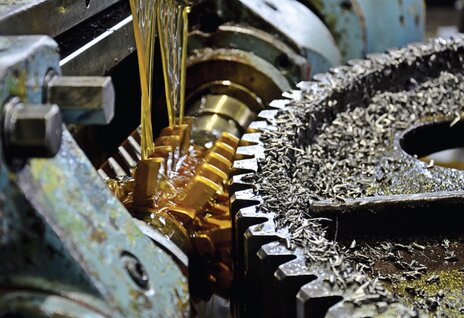
One of the main causes of premature equipment failure is lubricant contamination. Up to 40% of maintenance costs are related to lubricants, which is why lubrication management is vital to profitability. Lubricants represent high costs, not only in financial terms but mainly for the environment.
The moment the oil reaches its useful life, it must be disposed of. Today, only a small portion is recycled, often into base oil, which is stripped of additives from the original modification process.
Today's linear use of industrial oil, where the oil is used until it degrades, then discarded and replaced with new oil, is extremely unsustainable and inefficient. However, the life of the oil is limited by degradation. And since there were no corresponding methods available to eliminate the causes of degradation, its linear use is the norm.
Reusing the oil without losing its properties? 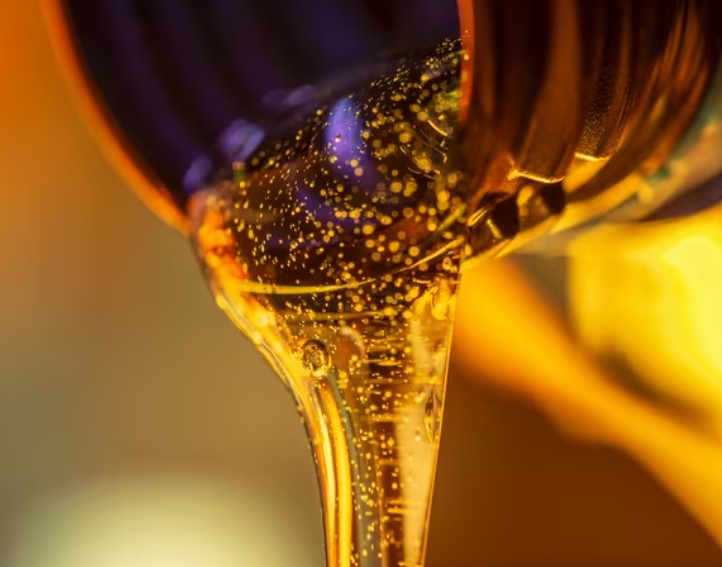
Thanks to the double separation technology (DST), it is possible to capture and separate from the oil particles and other impurities down to nano-size. By removing nanoparticles and all other particles, the original properties of the oil are preserved and its aging is prevented. Unlike conventional filter technologies, DST enables continuous regeneration of the same lubricating oil without stripping it of the additives that provide the properties required by your machines and production processes.
DST cleans the oil to a higher level of purity than brand new oil . As a result, in some processes, DST-treated extra virgin oil provides greater durability than new oil.
Two approaches to DST oil regeneration
It is a patented technology with roots in biochemistry and the only industrial solution that can remove nanoparticles from industrial oil.
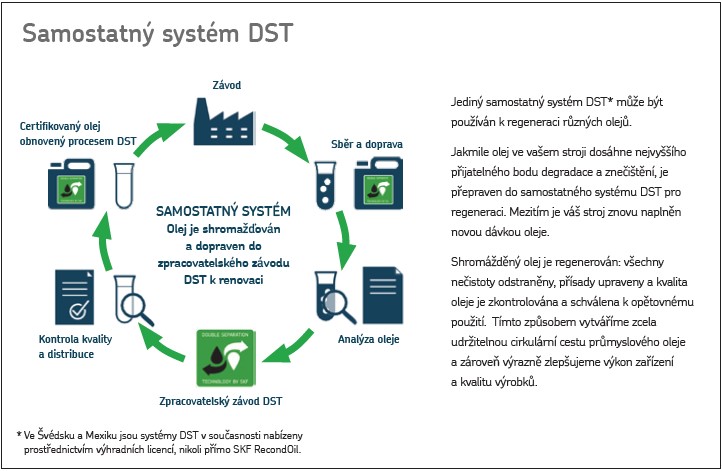
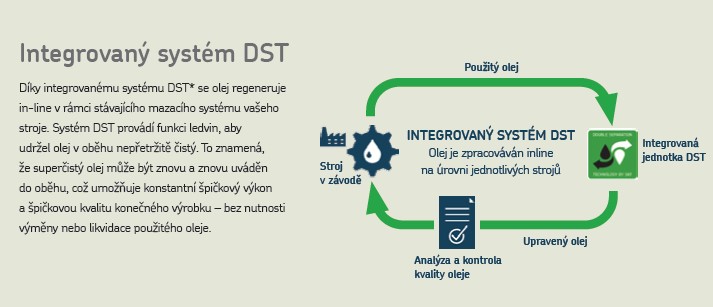
SKF RecondOil
With SKF RecondOil, circular recovery and reuse of industrial lubricating oil is possible. 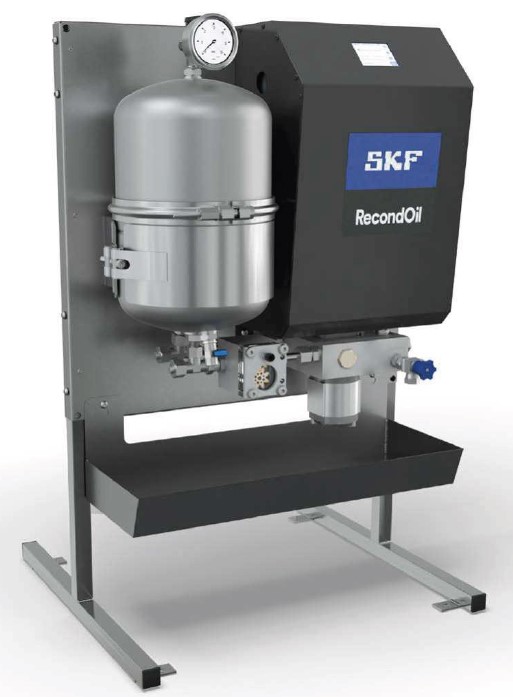
Removes all types of pollution
- soft and hard particles up to nano size
- bacteria
- water (free, bound and emulsified)
- sludge and insoluble substances (eg varnish)
- soluble oxidation products (varnish base)
Advantages:
- economic maintenance
- no oil changes = environmentally friendly
- changing filters instead of changing oil
- extended life of machines
- less downtime
- no oxidation in the oil


